

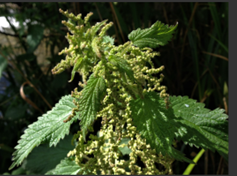
Stinging nettle (Urtica dioica L.) is a common wild herbaceous perennial plant. It’s a multi-purpose crop that grows worldwide but most people in the UK would class it as an annoyance and not as a useful crop. But it IS a useful crop!
The leaves are abundant in fibre, minerals, vitamins, (including K, which is unusual!) and antioxidant compounds like polyphenols and carotenoids, as well as antioxidant compounds like polyphenols and carotenoids. Stinging nettle has antiproliferative, anti-inflammatory, antioxidant, analgesic, anti-infectious, hypotensive, and antiulcer characteristics from all parts of the plant actually (leaves, stems, roots, and seeds).
Young leaves can be used as you would spinach to make curries, soups, pasta sauces etc. A popular use for the leaves is for a nettle tea. This can be quite strong when you are not used to it and it does have a rapid effect on the body so if you do make some, try a little at a time.
To make tea:
The default proportion would be one cup of nettle leaves to every 2 cups of water.
Bring water to the boil on the hob.
Add the fresh nettle leaves, reduce the heat down to medium and let the leaves steep in the water for five to seven minutes. Leave for longer if you want stronger tea.
Add a spoonful of honey or sugar if you feel it needs sweetening.
And serve!
**Avoid if you have any of the following conditions though: You are pregnant; Kidney stones; Blood sugar control issues; Lowers blood pressure; using blood thinners; sensitive stomach; insomnia if using sedatives**
The root is used for various medicinal purposes, including hayfever remedies and joint pain relief.
The seeds are a great protein source and appear on female plants in mid-summer/autumn – female plants are distinguished by their slightly frosty appearance and droopiness of the flowers. Seeds are ready to pick when the long seed bundles droop towards the stem – just pick the top third so you leave some for the plant itself. Cut off the seed clusters, put in a kitchen sieve over a larger bowl, rubbing the threads through a sieve to release the seeds from the little stems, which can then be thrown away. Put seeds in a jar, and they’ll last for up to a year.
The whole plant
Making a nitrogen rich plant food – soak outside in a large container of water, after crushing the stems (the more damage the better) give it a stir and weigh down with a brick. Then cover with a loose lid on for around 4 weeks. It will smell horrible, so be aware of that, but your plants will thank you! Use one part feed to 10 parts water in your watering can.
The stems can even be dried and used for making rope/twine!
What an amazingly useful plant!
When harvesting the leaves, make sure you are wearing long sleeves and thick gloves or rubber gloves and wash the plant thoroughly.